
AI integration
AI that works on your own technical data
The hakapesy™ AI module works from your company’s work orders, reports and machine history. It takes admin off technicians and the office, while decisions stay with people.
In production
From dictation to a work order draft
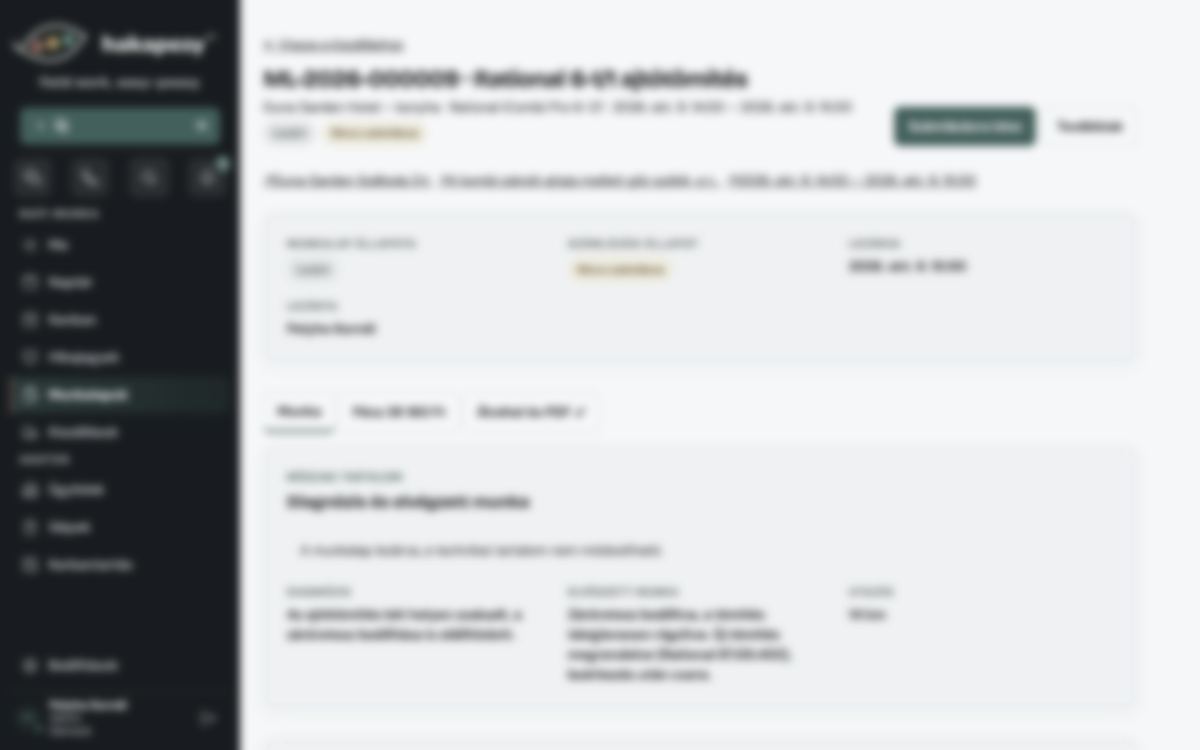
On site, the technician describes what they found and did. The system transcribes the recording and fills in the work order fields: diagnosis, work done, materials used. The technician reviews, corrects and approves.
- No typing, works with gloves on
- Structured output, split into fields
- Nothing reaches the work order without approval
- Trade vocabulary in Hungarian
AI modules
Where AI development is heading
AI modules are built on the technical data asset. The more work goes into the system, the more accurate the results.
Dictation to work order
The technician describes the job. AI fills in diagnosis, work done and materials.
Report interpretation
Fault category, urgency and likely cause suggested from the reporter’s text and photo.
Maintenance forecasting
Suggested maintenance dates based on risk estimated from history.
Technical knowledge search
Ask your own work orders: what did we replace last time on this model, and what fixed it?
Machine history analysis
Recurring faults, frequently replaced parts and deteriorating machines highlighted automatically.
Quote suggestions
Replacement or upgrade proposals when repair costs stay high.
Data-driven features already work technically. Their results come from the work orders and history collected in the system, so their accuracy grows with the length of our collaboration: the longer you record your jobs, the more they give back.
How it works
Data, model, human approval
Your data
Work orders, reports, machine history and photos within your company.
AI processing
Transcription, classification, search and summarisation.
Suggestion
A draft or suggestion appears for the user.
Approval
The technician or office accepts, corrects or rejects it.
Principles
Responsible use of AI
People decide
AI suggests, the user approves. There are no automatic changes.
Stays within the company
One company’s data never ends up in another company’s AI results.
No training on your data
We do not train our own or third-party models on customer data.
Switchable
AI features can be turned on or off per company and per role.
Transparent
Data processors are named in the privacy notice.
EU data storage
Stored data stays in the EU.
30-day trial with your own data
We import machines and customers from your existing spreadsheets and print the first QR labels.